
SNAP External Valve Control Option
The SNAP vacuum controller uses Time-Based Vacuum Differential Control to actively optimize vacuum performance. It regulates an external valve based on real-time vacuum differentials (VD) within a defined time window (VDW), helping the system reach setpoints faster and more reliably.
How It Works
The controller continuously compares the current vacuum level to the setpoint. If the system fails to reach the required differential within the defined time, it opens the external valve. It then modulates the valve as needed to quickly drive the system to the target vacuum.
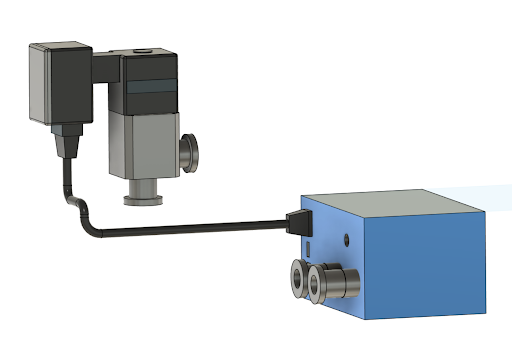
Configuration
Set up Time-Based Vacuum Differential Control through DVCUP using two parameters:
- Time Interval (VDW): The time allowed to reach the target differential (seconds)
- Vacuum Differential (VD): The minimum change in vacuum required within that time (Torr)
If the vacuum does not improve by at least the VD value before the VDW interval expires, the controller opens the external valve.
Example
- VD: 20
- VDW: 10
If the vacuum does not improve by at least 20 Torr within 10 seconds, the controller opens the external valve to accelerate progress toward the next setpoint.
Commands (via DVCUP)
DVCUP Example:
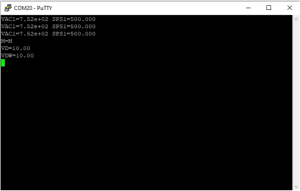
Here is an example of the SNAP connected using DVCUP. The commands for the variables are as follows.
To query the current value:
VD?
VDW?
To assign a new value:
VD=(x) in Torr
VDW=(x) in seconds
DVCUP does not echo commands—it only returns the response.
Want Time-Based Vacuum Differential Control for your process? Check out the SNAP here!
