FYRA for End of Primary Drying Detection | Vacuum Drying Monitoring
What is Fyra End of Drying?
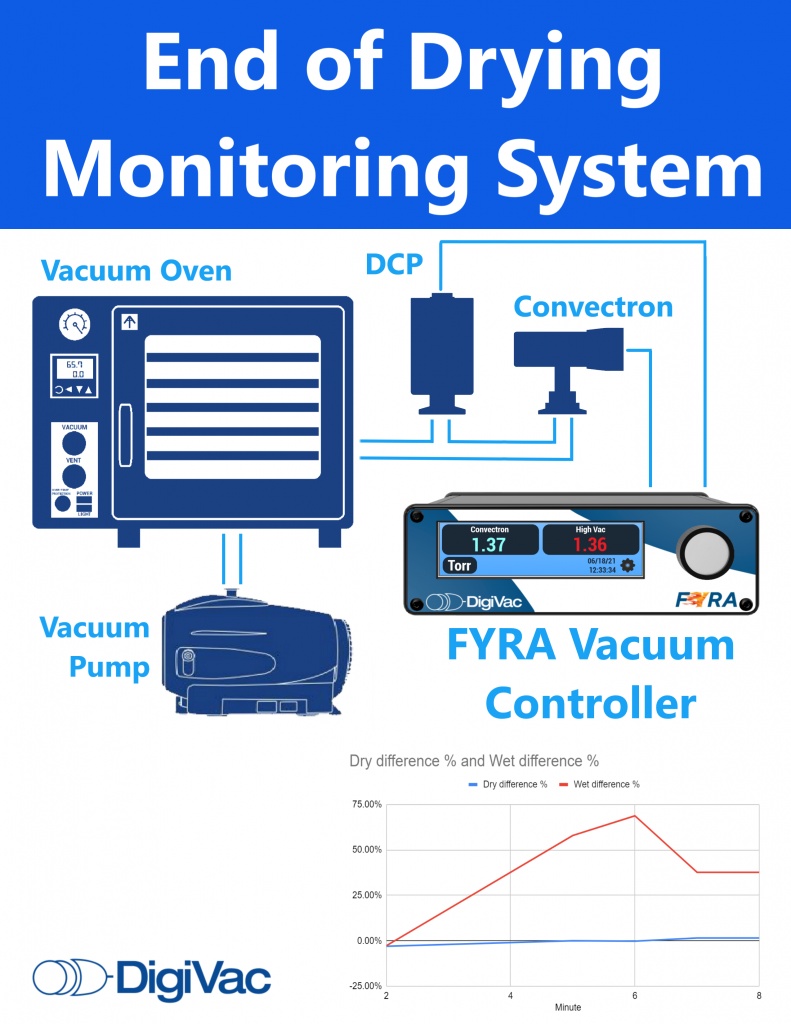
The FYRA for End of Primary Drying Detection is a bundle that assists in detecting when most of the water or residual solvent from a product has been removed or the end of primary drying has been reached in a vacuum drying application.
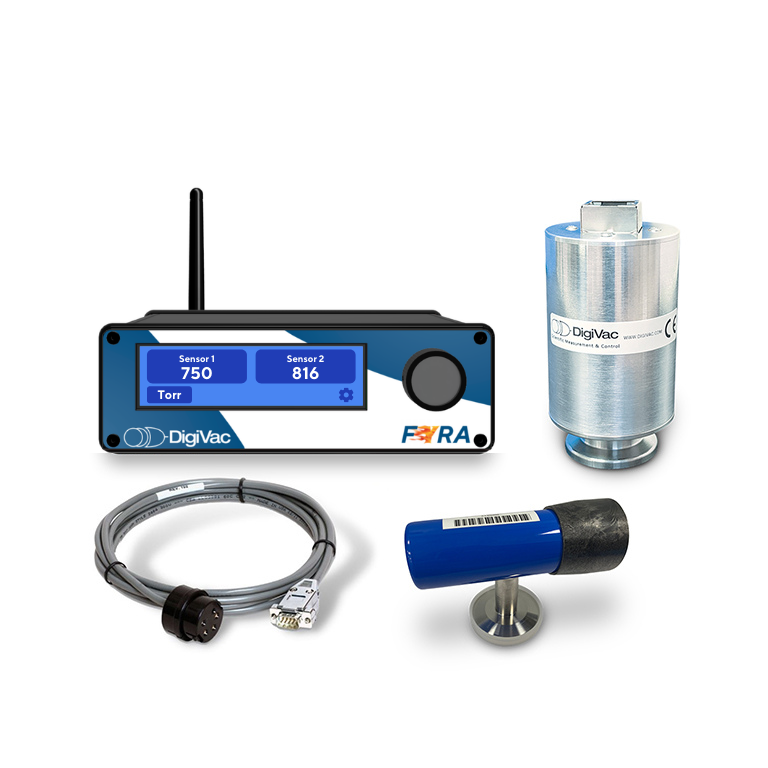
This bundle includes the FYRA vacuum controller paired with a DPCP Quantum sensor, a KJL 275 Convection-enhanced Pirani Gauge, and a Convection enhanced gauge cable. The DPCP Quantum sensor can measure a range from 10^(-5)Torr to 1000 Torr, while the KJL 275 has a range of 0.1mT to 1000 Torr.
How Does Fyra End of Drying Determine When Drying is Complete?
You can determine when your process’s drying cycle is complete by viewing the pressure differentials measured by the Convection Pirani Sensor and a Capacitance Manometer that are included in the End of Drying bundle. The Fyra will display two sensor readings for easy comparison. This bundle we recommend a manual bleed valve that will be used to “flush” the sensors prior to taking a measurement and an installation connection kit for the bundles.
Capacitance Manometer vs Pirani Convergence Test with FYRA
The Pirani vacuum gauge is built in such a way that the gas composition will alter its pressure reading. Pirani vacuum sensors read erroneously high in the presence of water vapor. A capacitance manometer is designed in such a way that it indicates the absolute vacuum and is not affected by water vapor in the system. When your vacuum drying equipment is equipped with both a thermal and direct measurement, these sensors can be utilized to indicate the end of primary drying.
How use End of Drying
Key Steps
- Initial baseline:
- Stabilize the system with a clean, dry, and empty chamber.
- Log the readings from both sensors to establish a small pressure difference (ΔP).
- Drying Process:
- Load the product into the chamber and begin drying.
- Initially, the Pirani sensor reads higher pressure due to water vapor.
- As drying progresses, sensor readings converge toward ΔP, indicating the end of primary drying.
- Use the Vacstable valve as a tool to inject small amounts of dry air into the chamber to knock off any stuck water molecules
Using FYRA End of Drying reduces guesswork, saves time and energy, and allows process documentation through its analog, RS232 or USB output and software.
Clean Process Documentation | Get a Baseline
Characterize the convection-enhanced pirani and the capacitance manometer (in this case the DPCP Quantum) against each other in a dry, empty system. The freeze dryer or vacuum oven is turned on, with nothing on the shelf. The shelf temperature can be left at room temperature, and the complete system should be stabilized with normal operating equipment and standard process settings. There may always be slight differences in the sensor’s readings due to their differences in design.
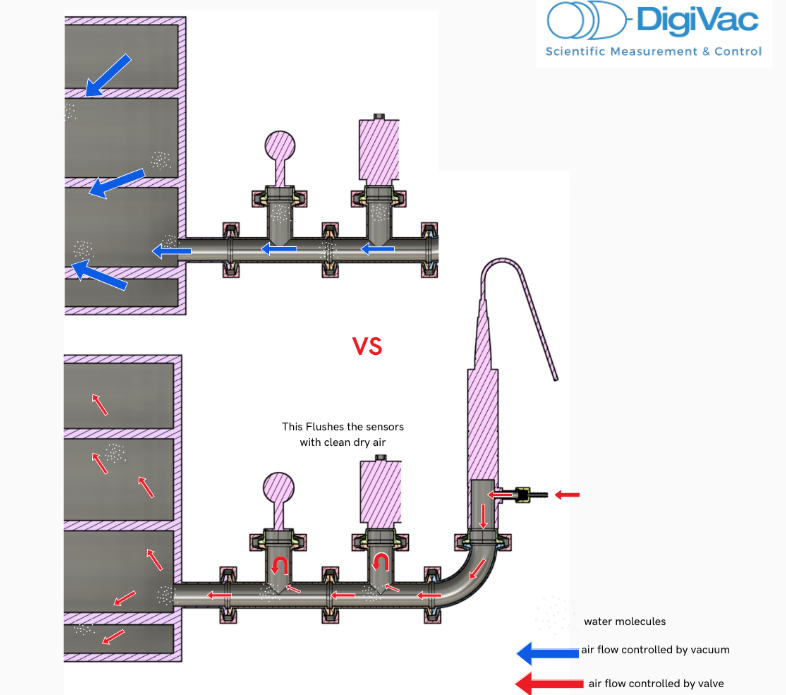
To determine your process “baseline” the chambers should be empty of product and the pump should be on. Once you have reached the ultimate vacuum level of your system, the bleed valve for each oven should be opened briefly for about three seconds and shut (“flushing”) to determine baseline pressure, document the pressure after a minute has passed. This will be your baseline.
The “flushing” action will clear any remaining moisture particles that have clung to the sensor’s surface. The difference in their pressure readings in a dry, empty and normally operating freeze dryer or vacuum oven will be relatively small (mT to 10’s of mT) when the system is working properly.
The Flow: Why Flushing is Important
- The molecules in a vacuum generally diffuse to make a homogeneous stoichiometry
- Sometimes vapor/particles can get “stuck” in crevices like sensors
- Flowing air moves molecules around, enhancing homogeneity while moving “stuck” molecules
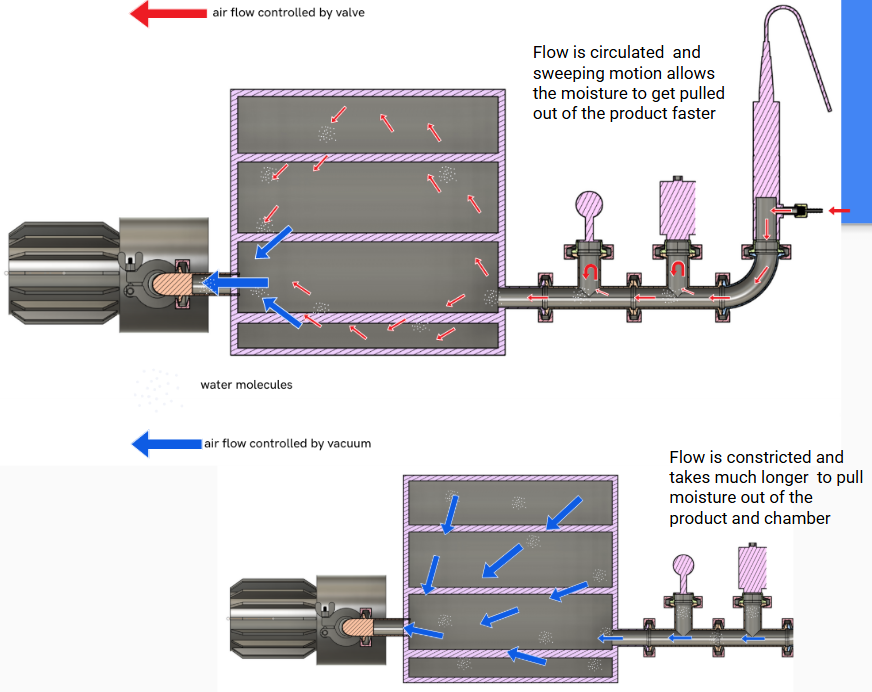
With the attached vent valve, the Fyra can automatically introduce clean dry air into the system saving time and creating a more efficient process. This new air flow flushes the sensors that have particle build up from traditional vacuum drying. And allows the sensor to accurately determine when the product is done drying and moisture is no longer present
Drying with Product
Once that is complete and the baseline is established, you are ready to fill the chambers with product and start your drying process. Intermittently you can “flush” your sensors to view the actual pressure differential to determine if the readings are near adjacent.
Once so, the process is determined to be done based on differential proximity and the product is dry; you are able to reload and dry once more. The vacuum oven or freeze dryer is allowed to become stable and the pirani and capacitance manometers are read. The pirani sensor will read a higher pressure than the capacitance manometer. As process drying progresses the amount of solvents converting to vapor will decrease as the product becomes lyophilized or dry.
The difference in pressure between the two gauges, when your chamber is dry, empty and at process temperature, indicates how close they come together when there is little to no water vapor in the gas mix over the product. This is your Pressure Delta (ΔP)
Traditional Method vs DigiVac Fyra End of Drying
Benefits
- Takes all the guesswork out of drying products
- Saves time + money
- Less chance of improperly dried product, either overly dried or not dried enough
- Improper drying could result in: Lost terpenes, product becomes moldy, expires and not useful, etc
- Increase Batch consistency
- the vacuum controller will remove any error that can occur by relying on physical interactions or inconsistencies with moisture left
- Allows for quicker more accurate method of assessing moisture content
- Enables Vacuum Control for finer process control
- Document process/log the data to compare and have as reference
- Easily integrate into PLC, Control system or scripting